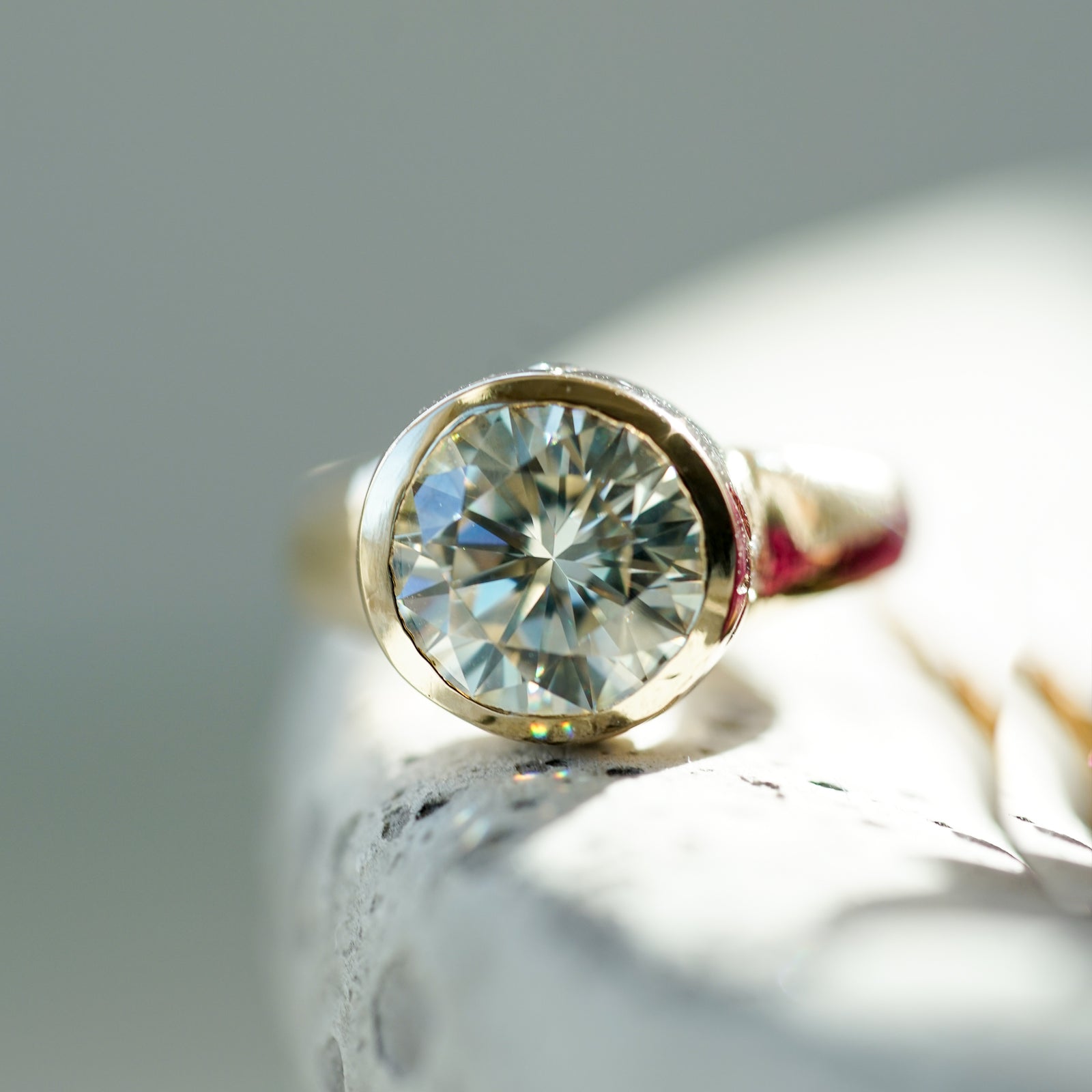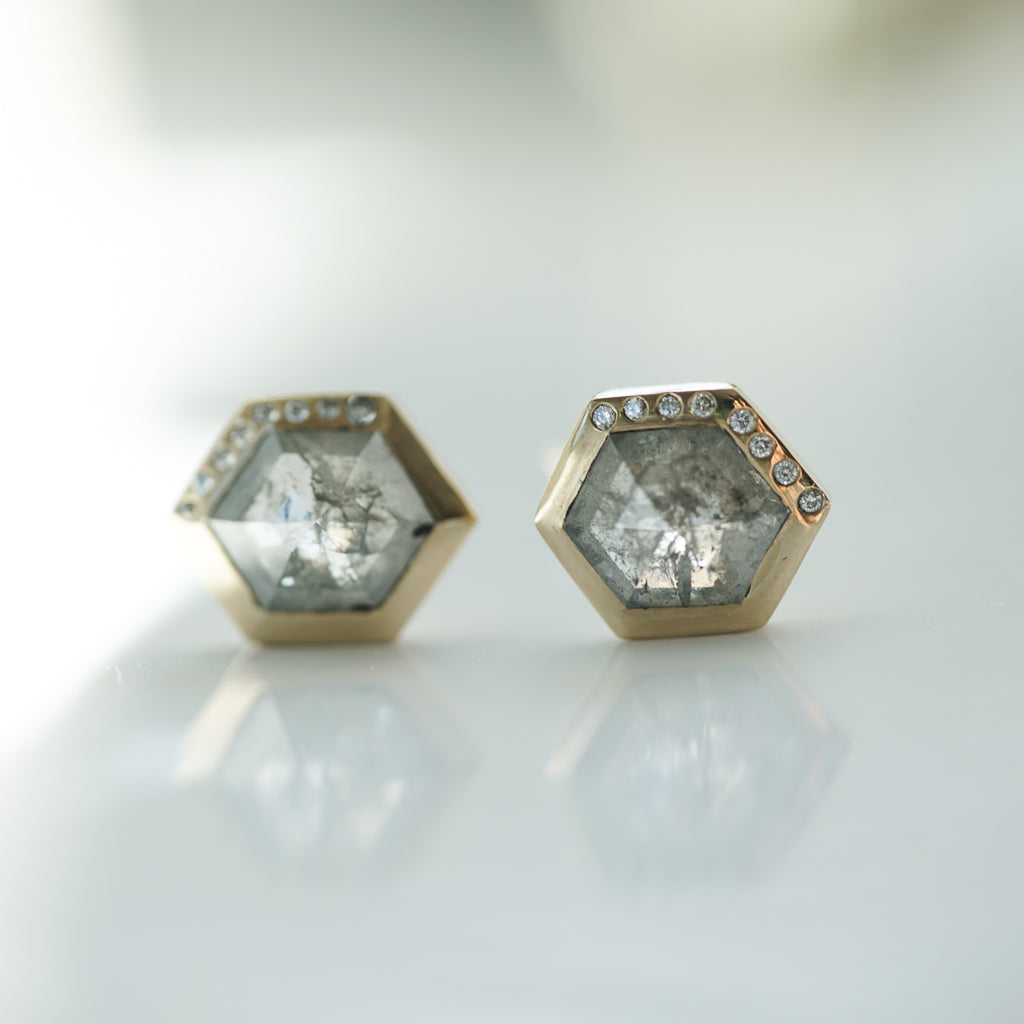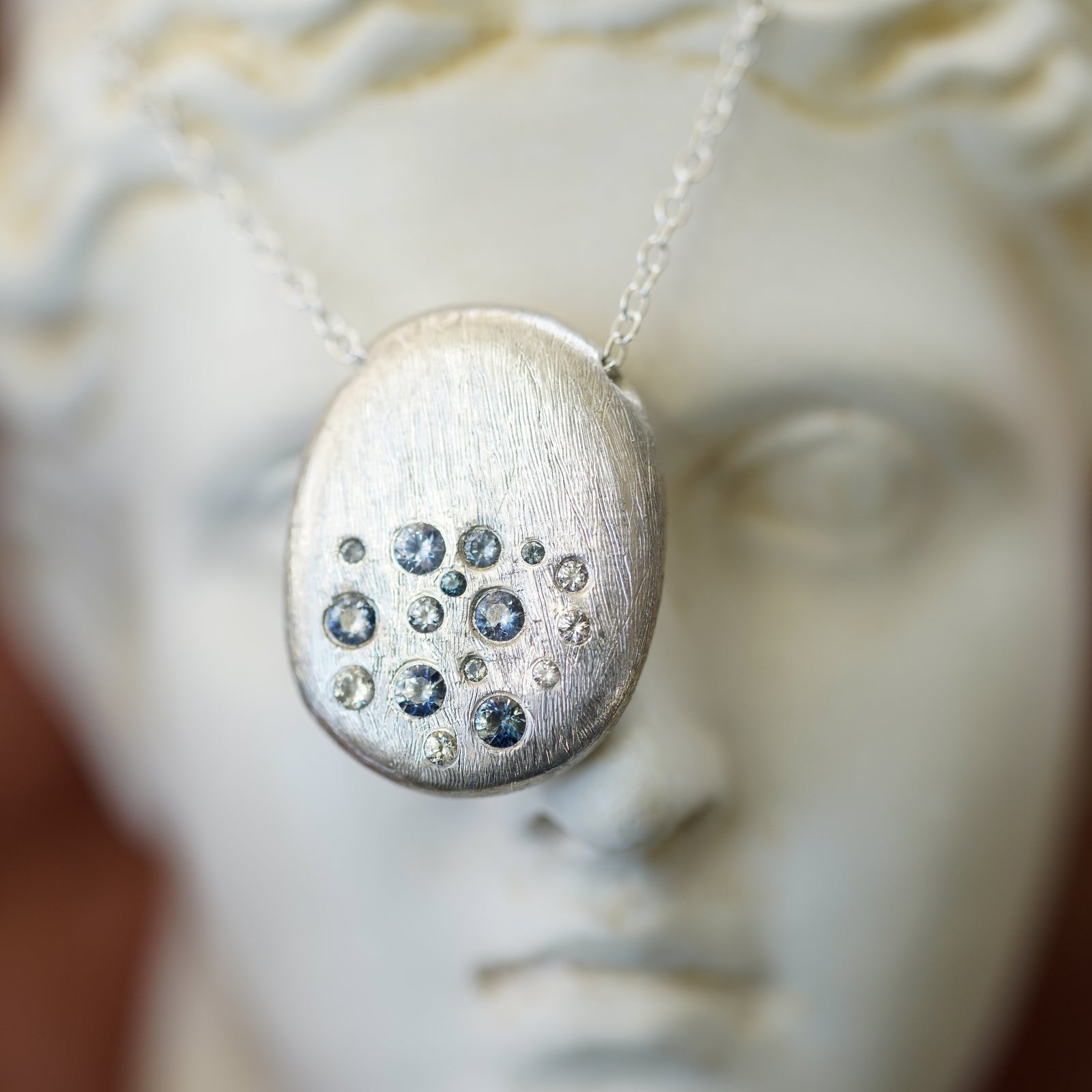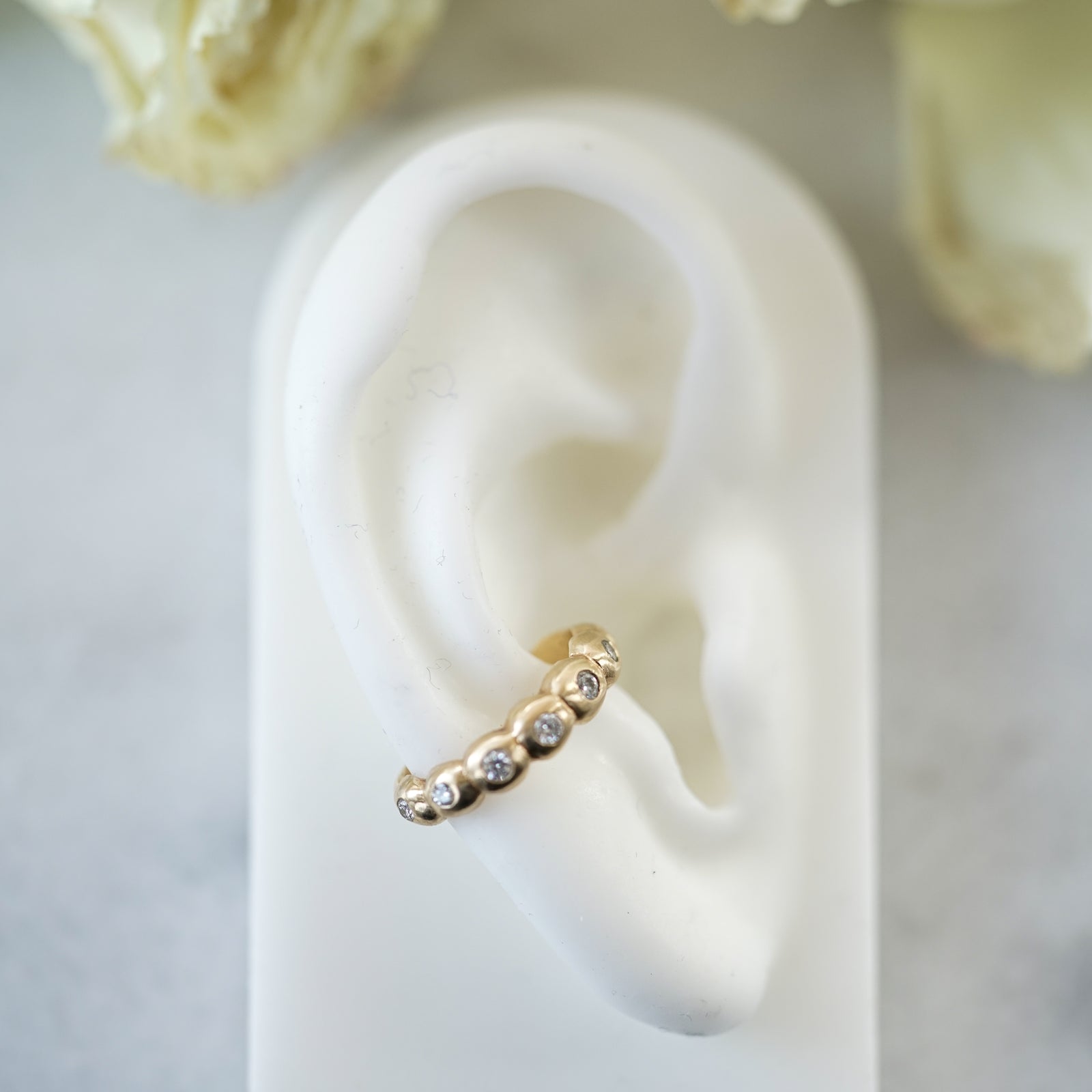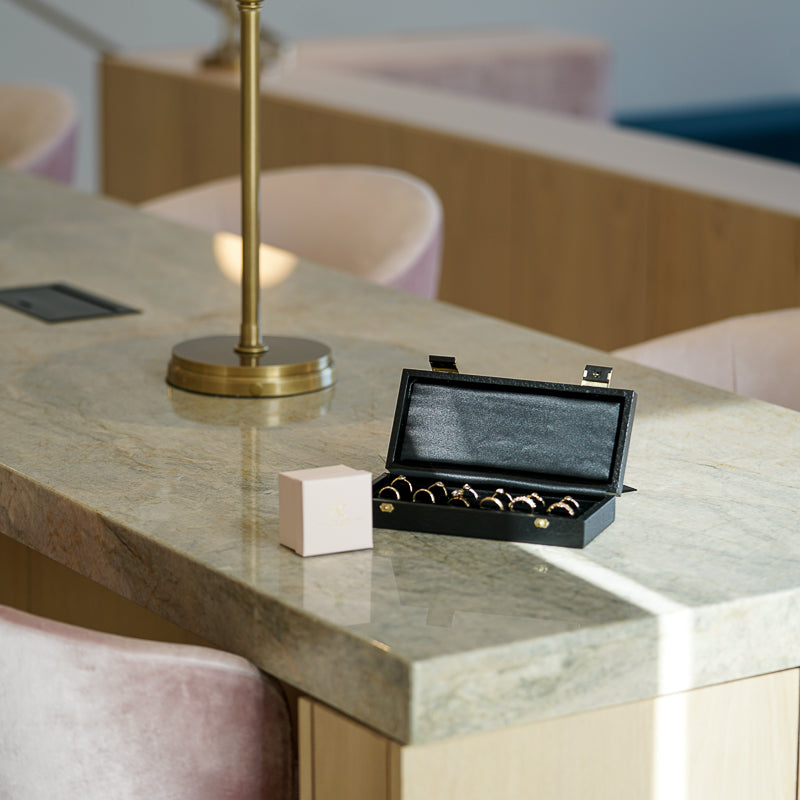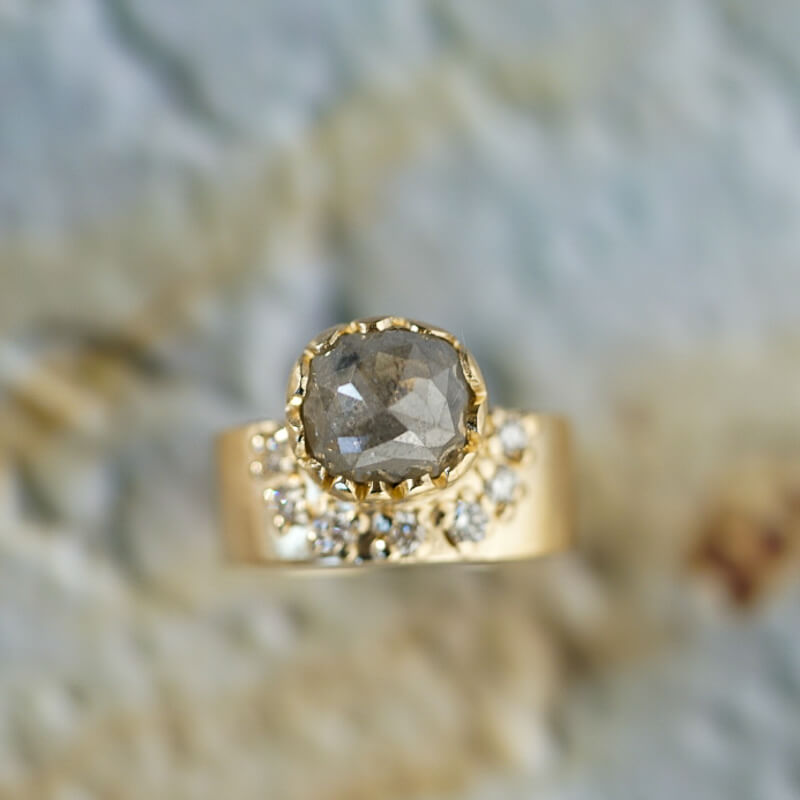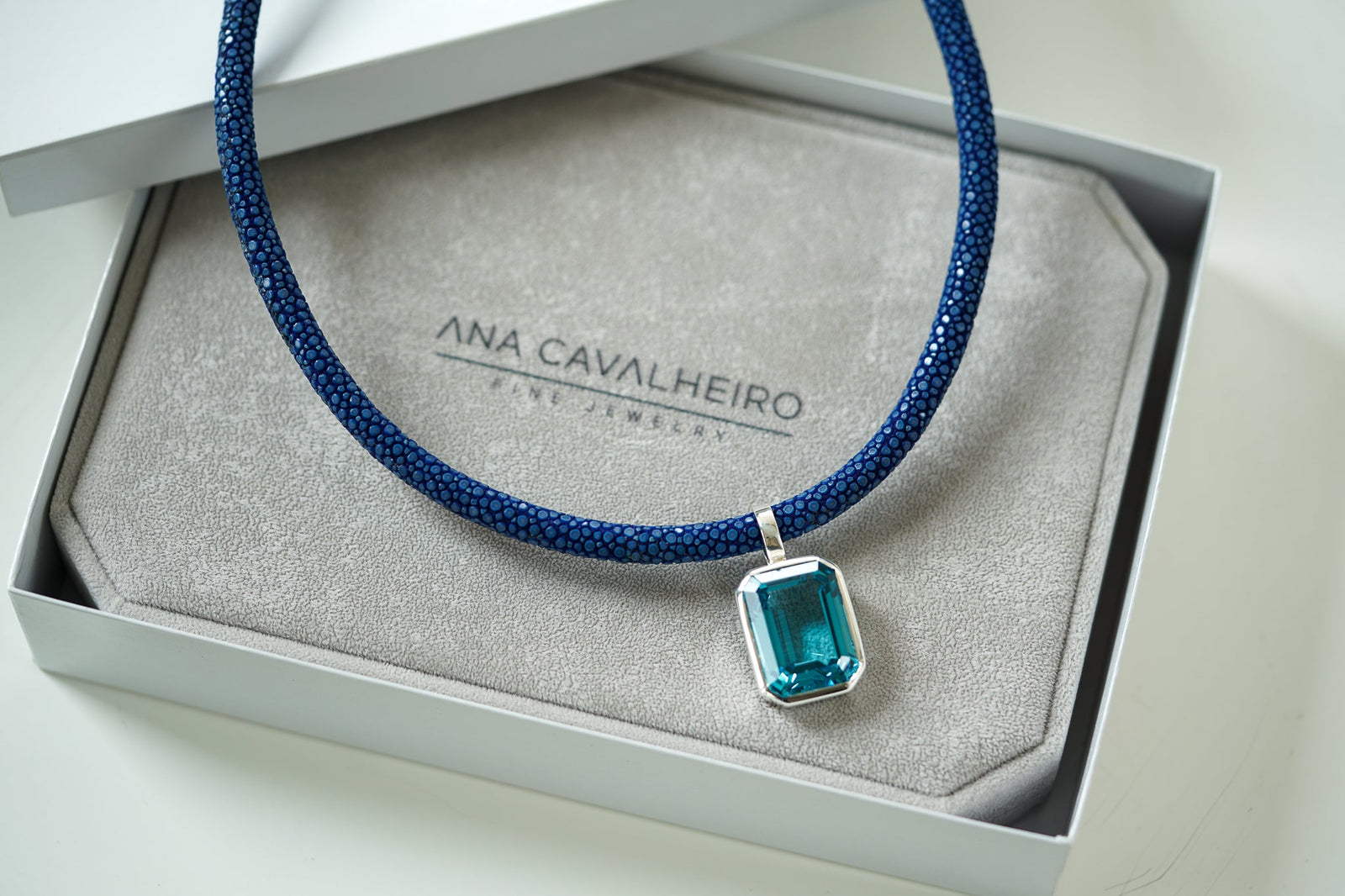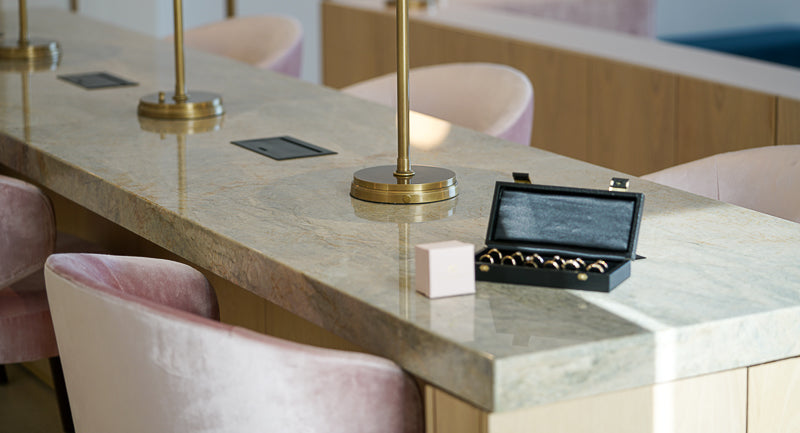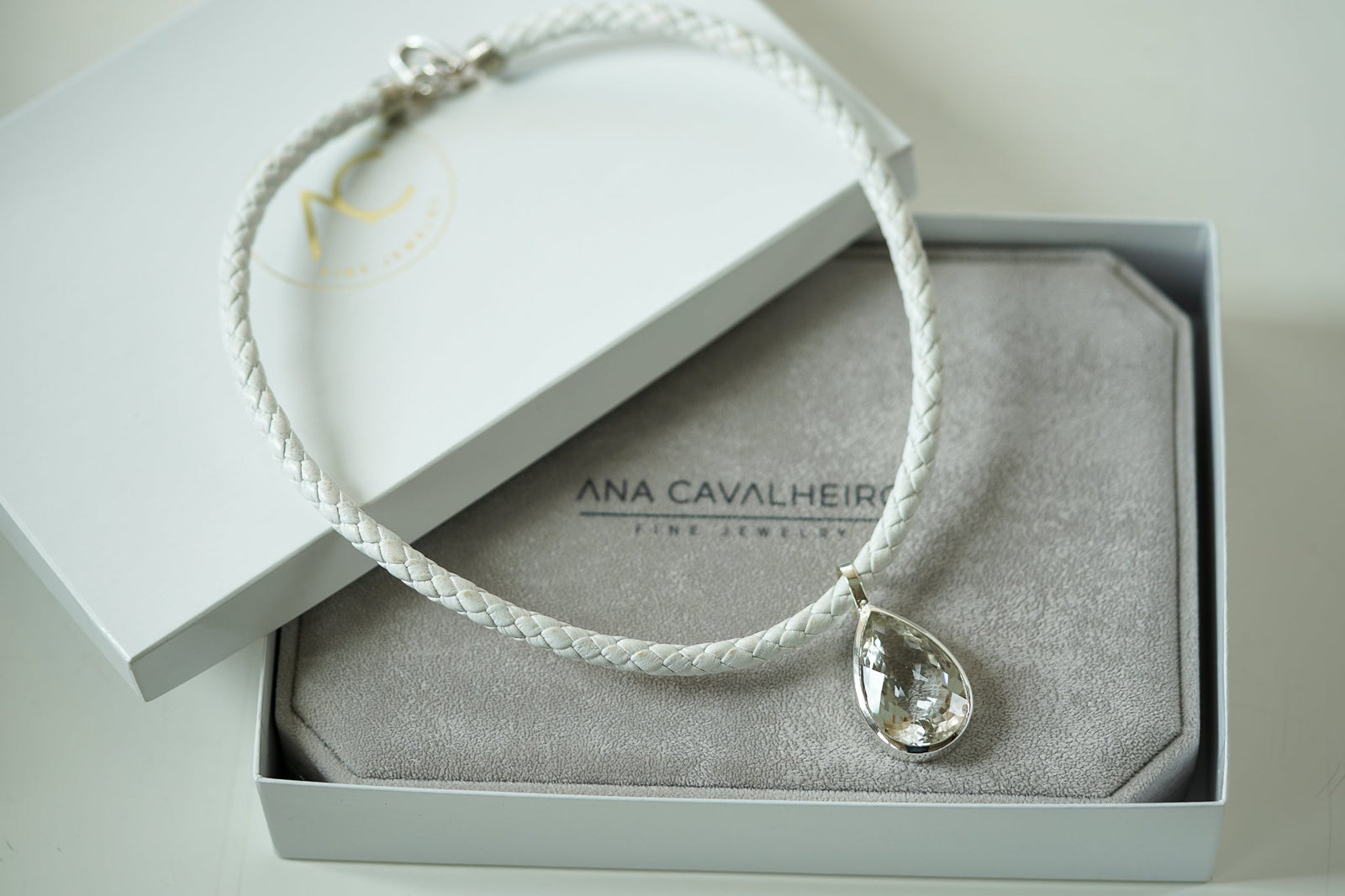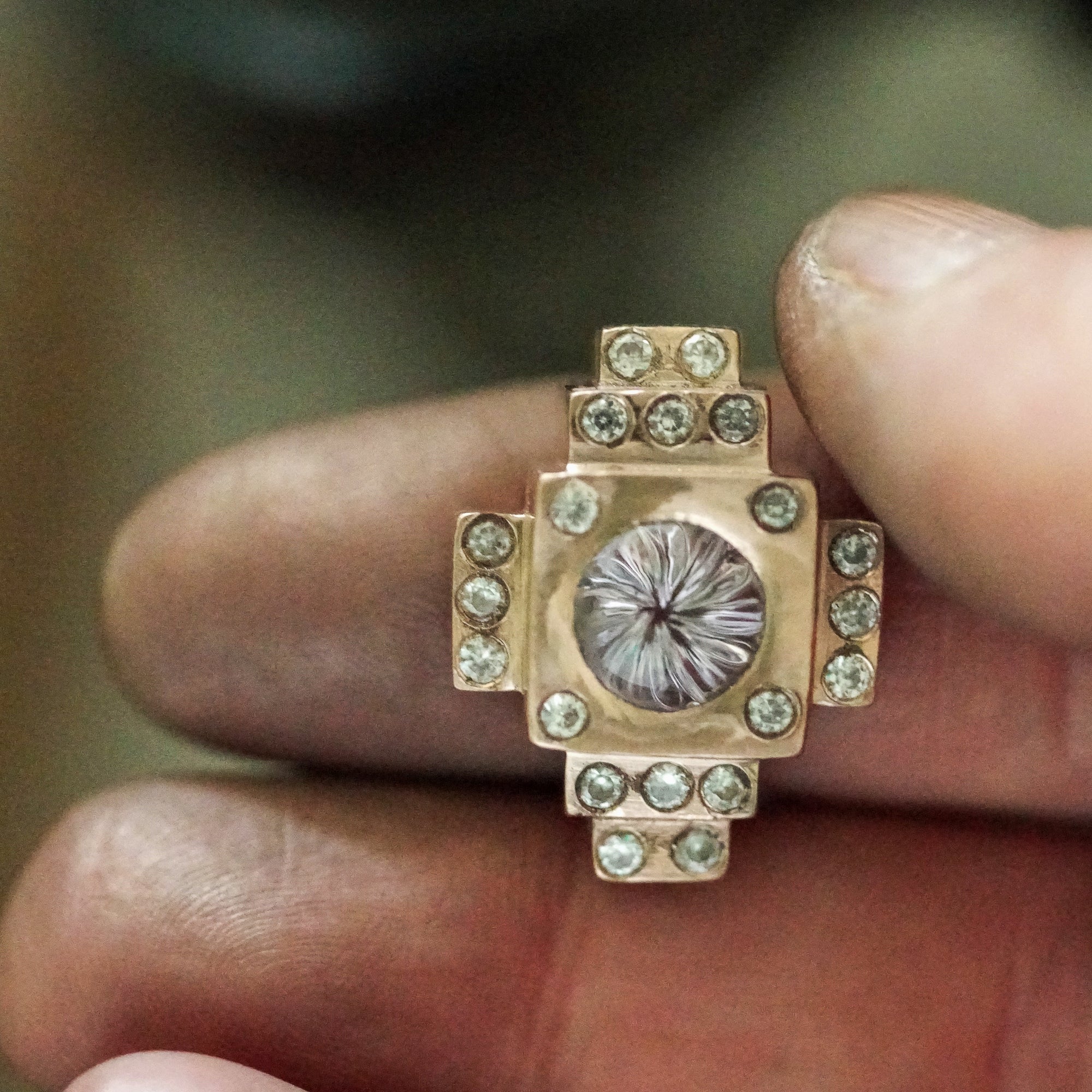


A client once sat across my worktable with a small velvet box of loose stones — three sapphires and a scattering of old melee diamonds pulled from a bracelet she'd stopped wearing. She had eleven inspiration boards saved on her phone under names like "maybe," "obsessed," and "no idea." She wanted a pendant necklace built around the sapphires. What she had, laid out in front of both of us, was closer to a hundred good ideas than one clear direction. The first consultation, usually 1.5 to 2 hours, is where I'm doing more listening than sketching. I'll show a handful of physical settings, a few loose stones for scale and color comparison, sometimes photographs of past work in a similar spirit. I'm watching for what she leans toward without being asked to — which sample she picks back up, which word she repeats.

Most people's experience with jewelry is a price tag on a case. And the thought is that it's always a big number because it involves gold and precious gemstones. But the truth is that bespoke jewelry work doesn't come with a tag, it comes with so many other things and layers that I think it's worth pulling back the curtain discuss what it actually covers.
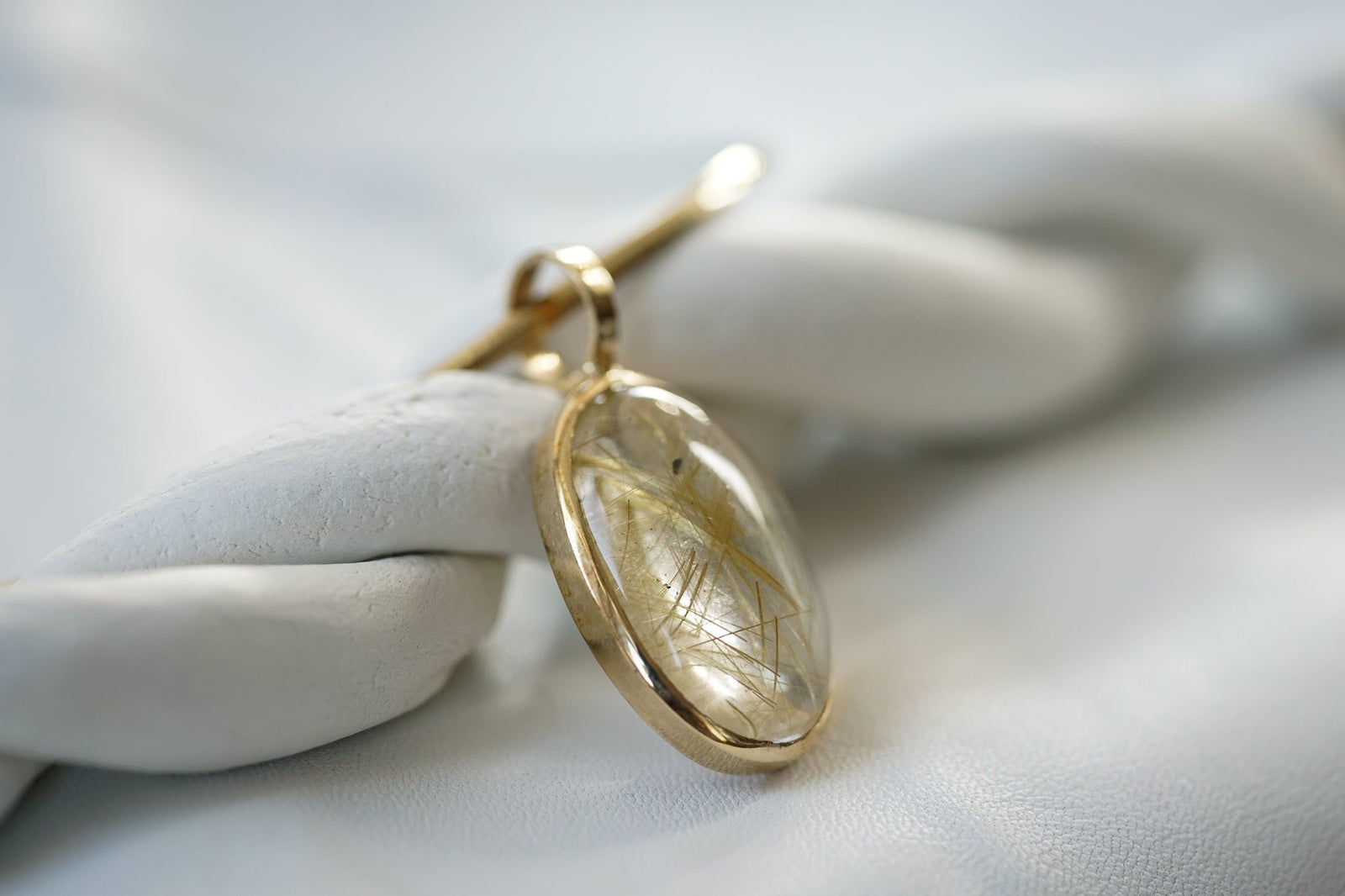
A while back, a client came to me with her mother's pearl and citrine brooch. Lovely piece but unfortunately the kind of piece that lives in a drawer. Maybe it will have a comeback but nowadays nobody pins a brooch to their coat anymore (and assuming we're wearing more serious coats and blazers like we did before). She wanted it reborn as a pendant she'd actually wear. And that sounds like a simple thing to do. You remove the pin

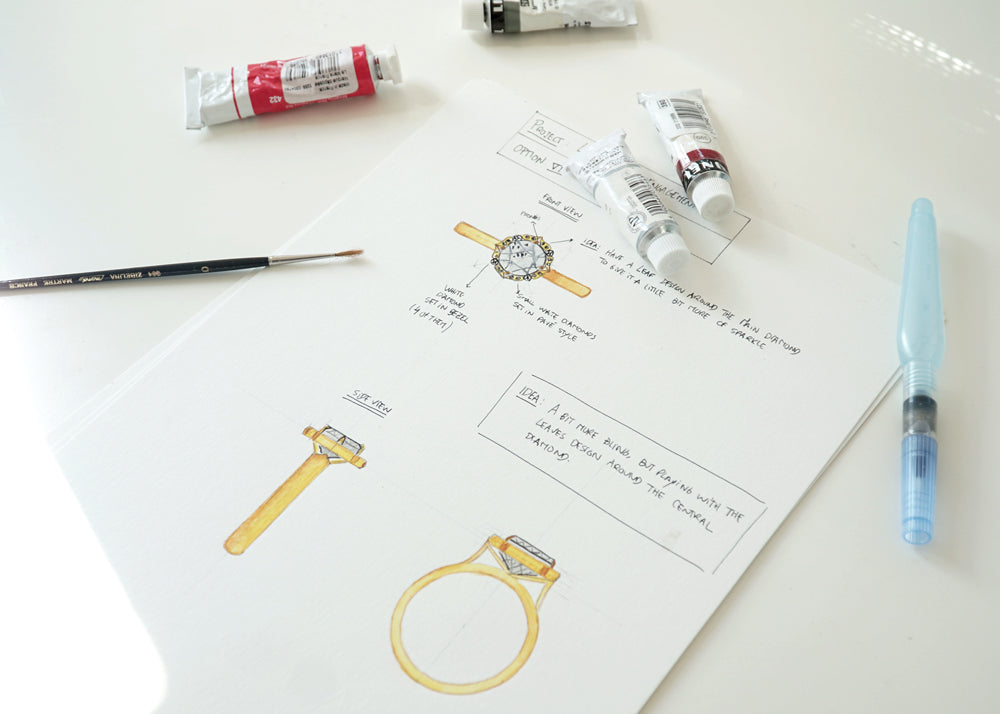
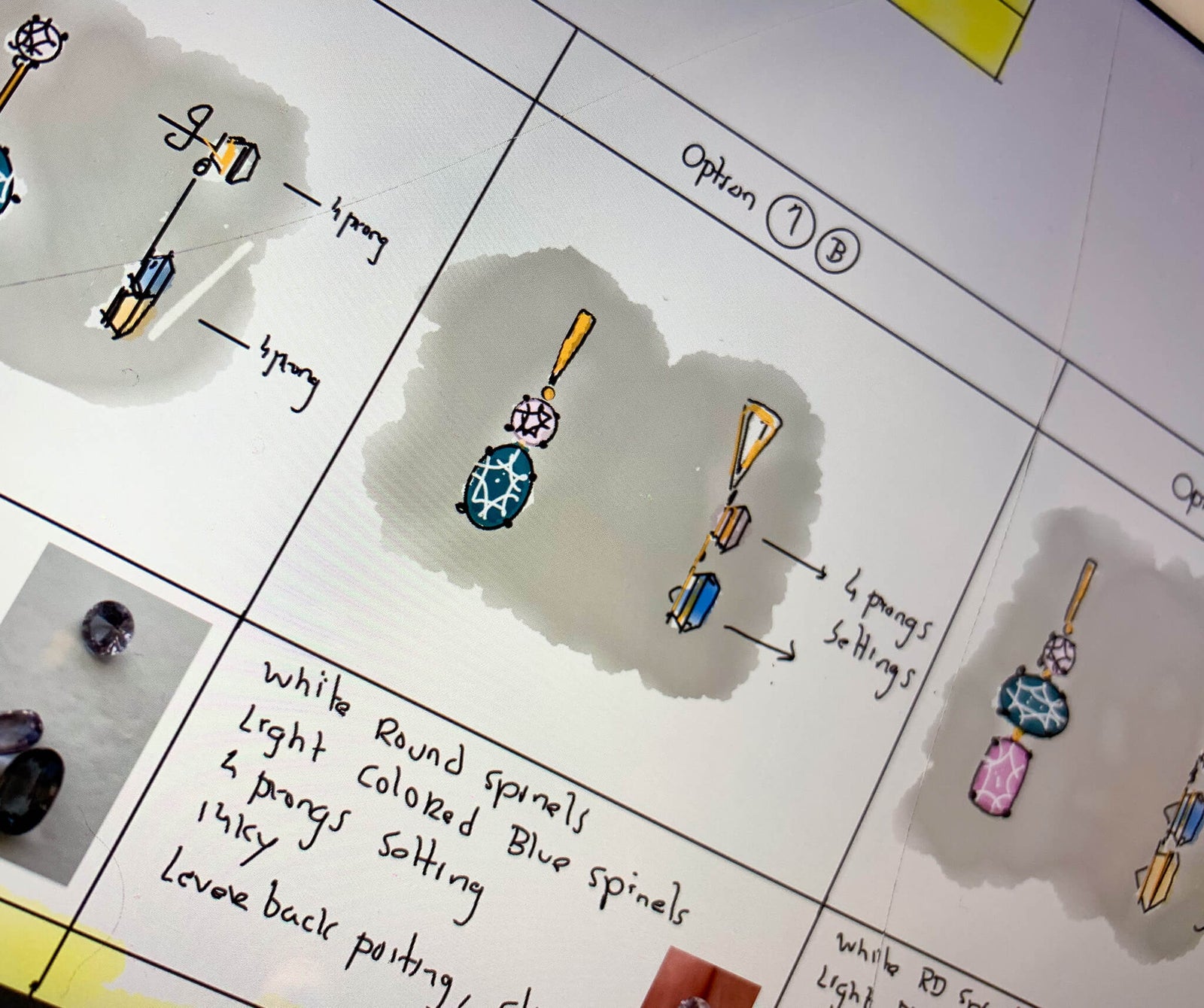
My quotes are all inclusive - let me explain. The materials themselves — gold, silver, gemstones, findings — are an integral part of the piece and they're also the easiest part to look up online. What takes a project from "cost of metal" to "cost of a finished piece" is everything that happens in between: the hours long multiple meetings with clients, the sketching and revisions before a design actually works in three dimensions and not just on paper, the sourcing of a stone that matches your budget and also matches the feeling you described to me, the wax model carved and cast, the meeting you come in to try the wax on your finger or that I ship to you back and forth, the hours at the bench setting stones and polishing by hand, and the finishing work that decides whether a piece feels expensive or just looks like it in a photo. None of that shows up on a gold- silver-price chart.

Once in a while I may get some version of this question in a quote conversation: "I saw something similar online for a fraction of this. Why is this more expensive?" It's a fair question, and it deserves a real answer instead of a vague one about quality. A shelf price and a bespoke price aren't the same kind of number. One is built around making the same thing thousands of times using economy of scales. The other is built around making one thing, once, for one person.

What I need from a client isn't a design. It's a story. Maybe it's a grandmother's ring you've always loved the color of, a place that matters to you, a stone you can't stop thinking about, or just a feeling you want the piece to give off when you look down at your hand. Sometimes clients bring very specific non-negotiables: this exact sapphire, this engraving, a certain proportion they saw once and can't shake. Other times they bring almost nothing concrete, just instinct and trust. Both are complete starting points. My job is to take whatever you hand me, precise or vague, and translate it into something that can actually be built, worn, and live with you for decades.

People assume a bespoke piece starts with a sketch. It doesn't. It starts with a conversation, usually a fairly unstructured one, where I'm doing more listening than talking. By the time I pick up a pencil, most of the important decisions have already been made — I just haven't drawn them yet. That first meeting can happen in the studio over coffee, or on a call if someone's not local, and either way I try to keep it loose. No forms, no checklist handed across the table. Just questions, and a lot of room for someone to think out loud.

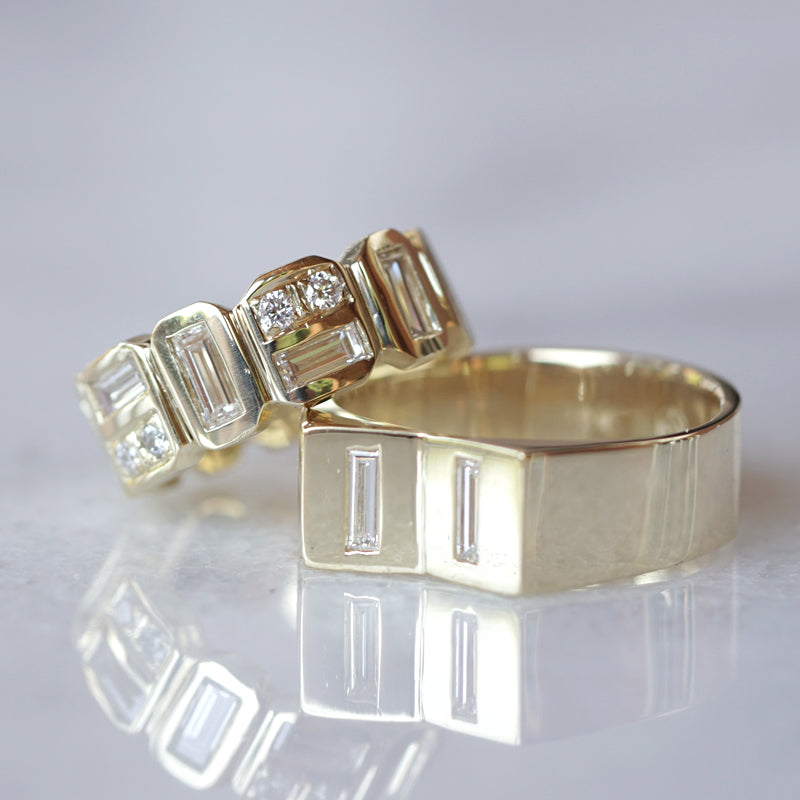
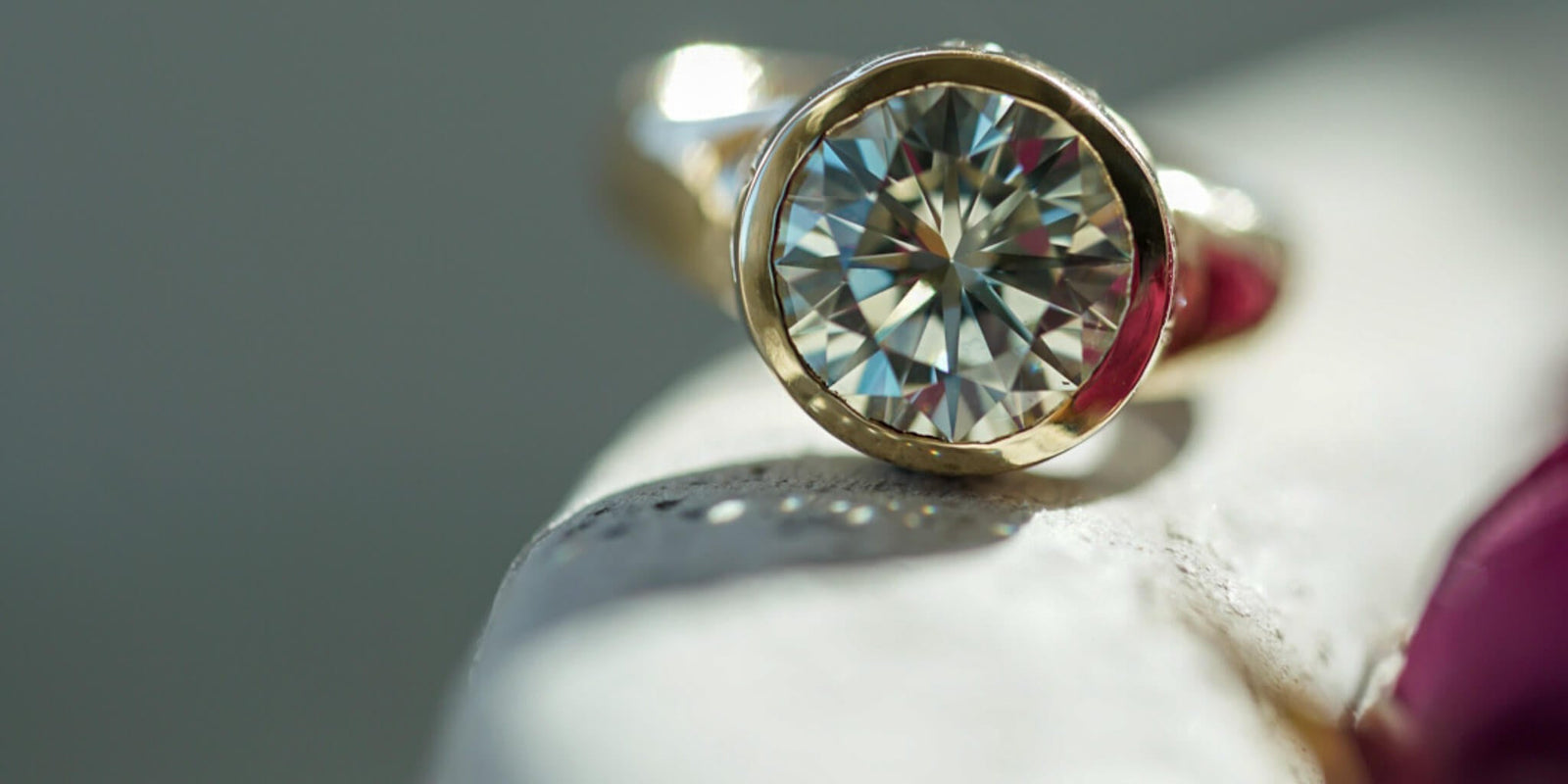
Clients are often surprised when I tell them that the difference between a piece that feels expensive and one that doesn't has very little to do with carat weight or gold price. I've seen large stones set into pieces that feel flimsy the moment you pick them up, and I've seen small, quiet rings that feel unmistakably substantial the second someone puts them on.

Every custom piece I make starts with a conversation, not a sketch. That first meeting sets the tone for everything that follows, and I've learned that the clients who leave that room happiest are usually the ones who came in with a little bit of homework done. You don't need a fully formed vision. You just need a few honest starting points.

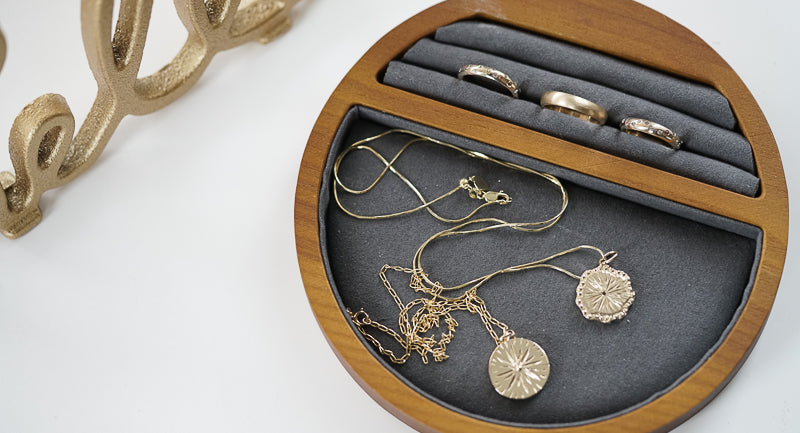
There is a particular kind of drawer in almost every home I visit. It is usually lined in velvet, a little worn at the corners, and it holds a ring, a brooch, or a strand of pearls that belonged to someone's mother or grandmother. The pieces are loved, they are never thrown away, and they are almost never worn.