













A wedding band that looks perfect on its own can sit badly against an engagement ring the moment you put the two on the same finger. I have watched a stone's gallery dig into a plain band, and I have watched two beautiful rings leave a visible gap between them. Both were lovely rings. They just had never been designed to meet.
Start with the height of the engagement ring
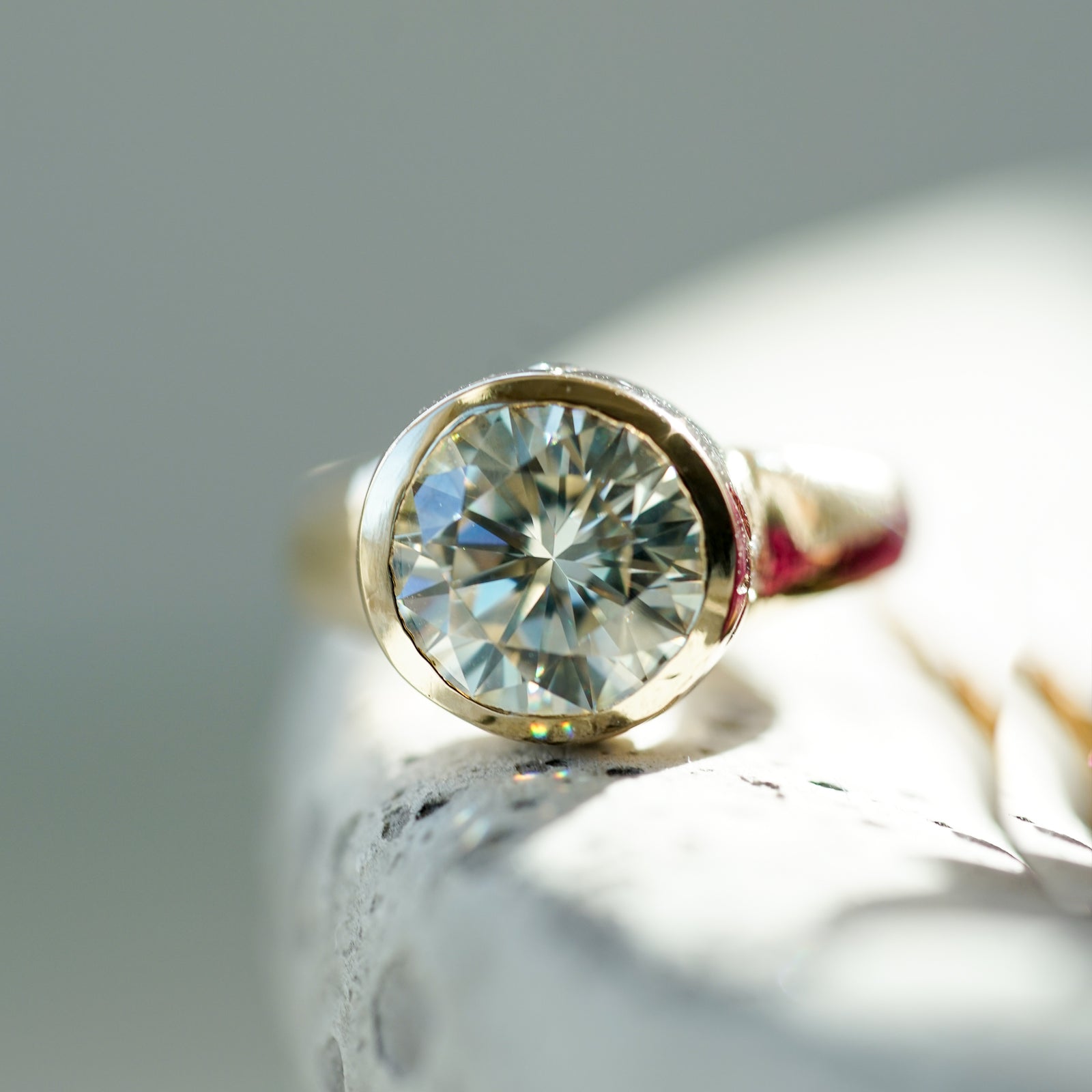
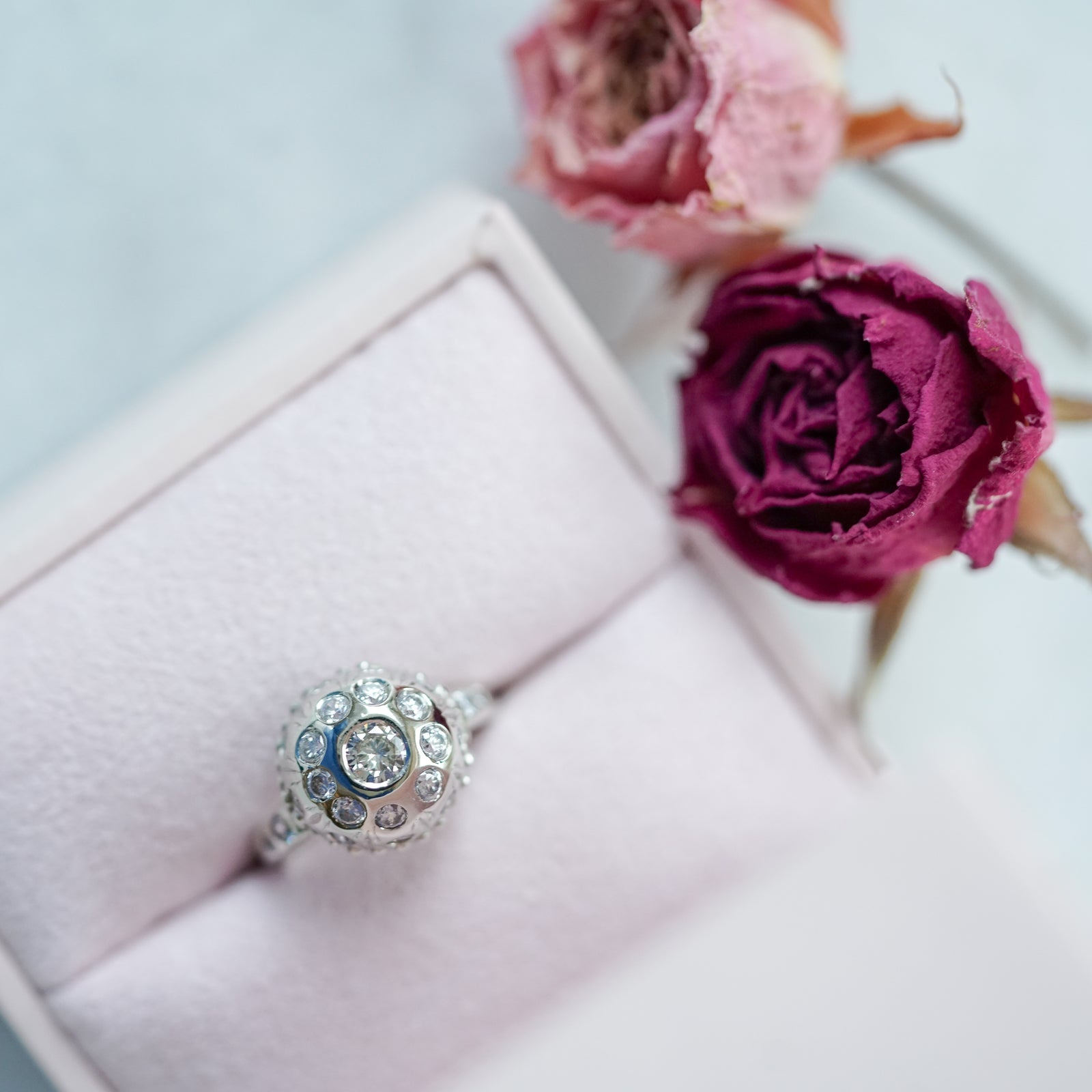
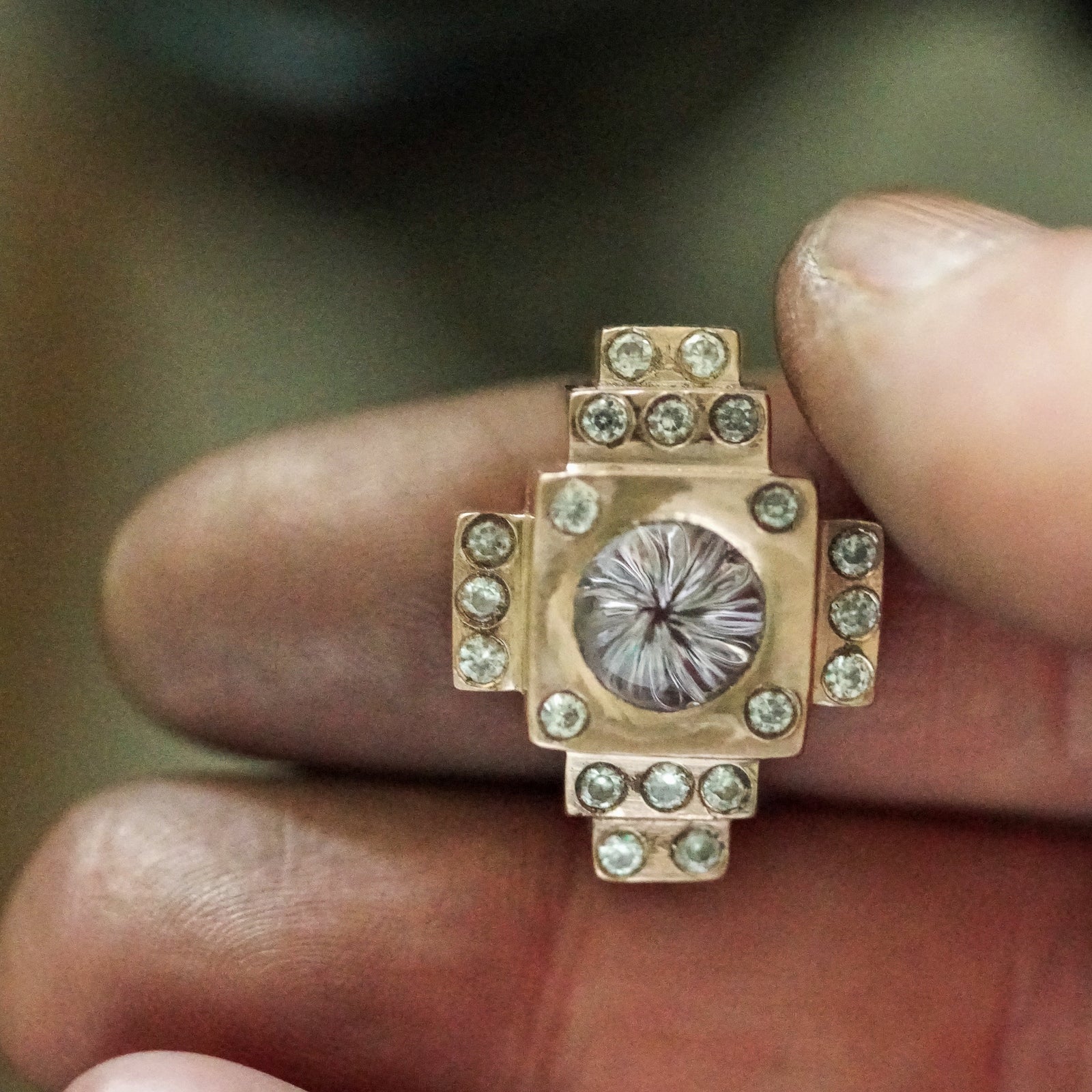
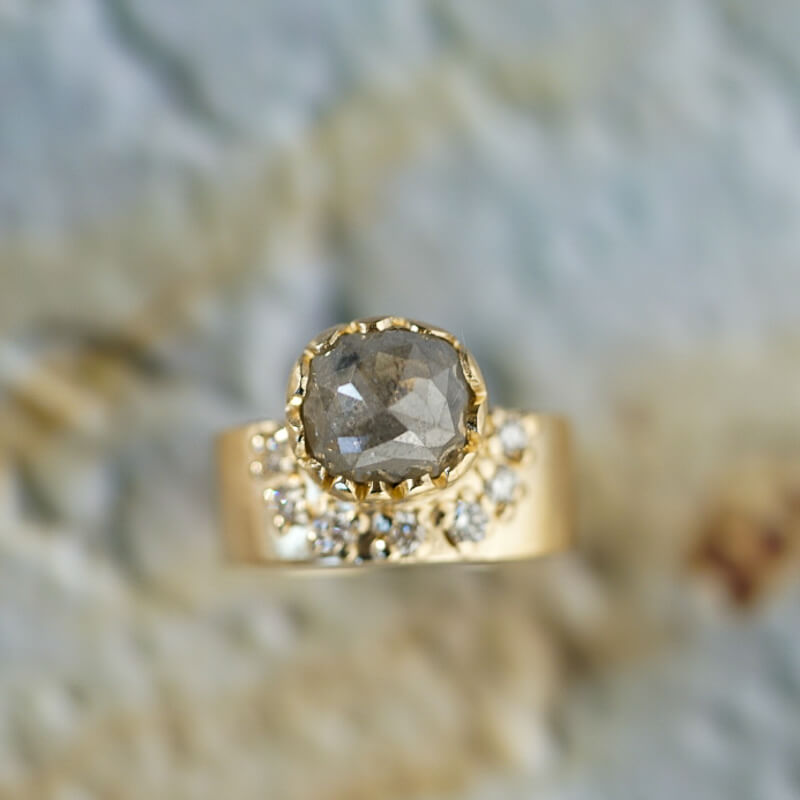
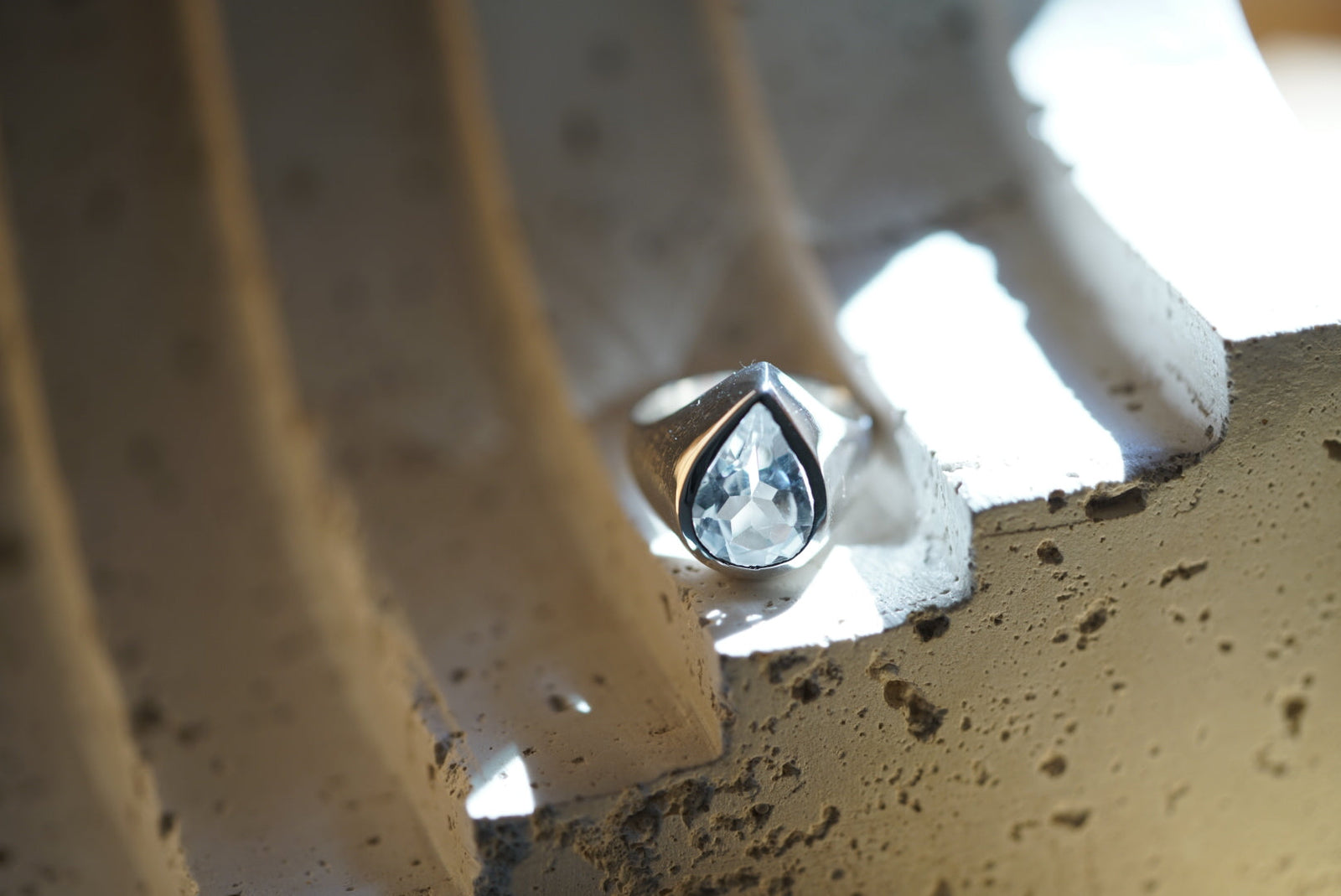
The first thing I check is how high the stone sits and how the setting is built underneath it. A low bezel can nestle against a straight band with no trouble at all. A tall cathedral setting or a basket with prongs flaring out at the base usually can't. Put a straight band next to it and you get a gap, and over time the two rings rub against each other and wear down the metal where they touch.
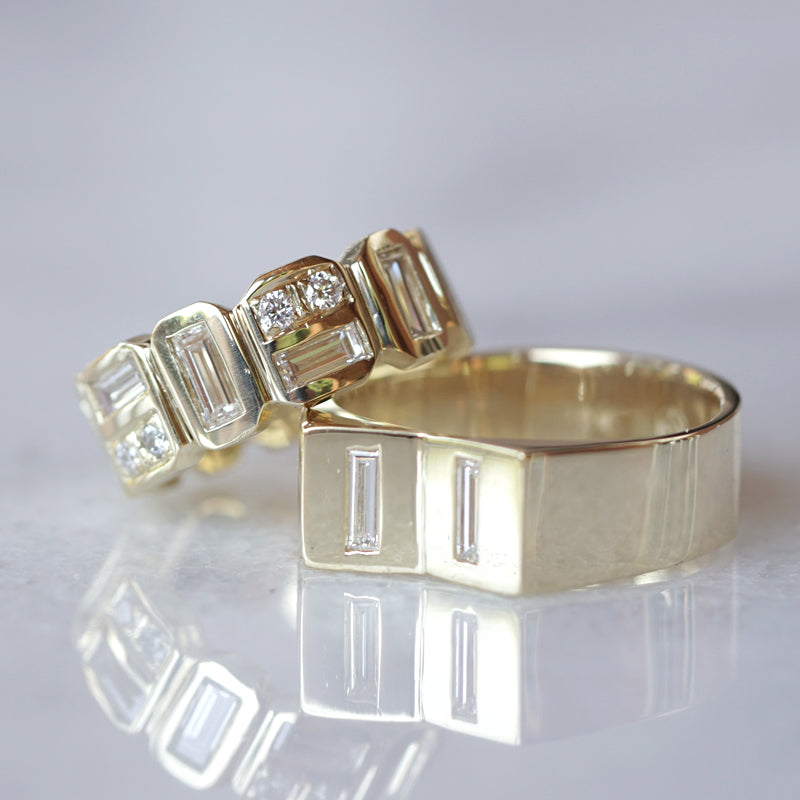
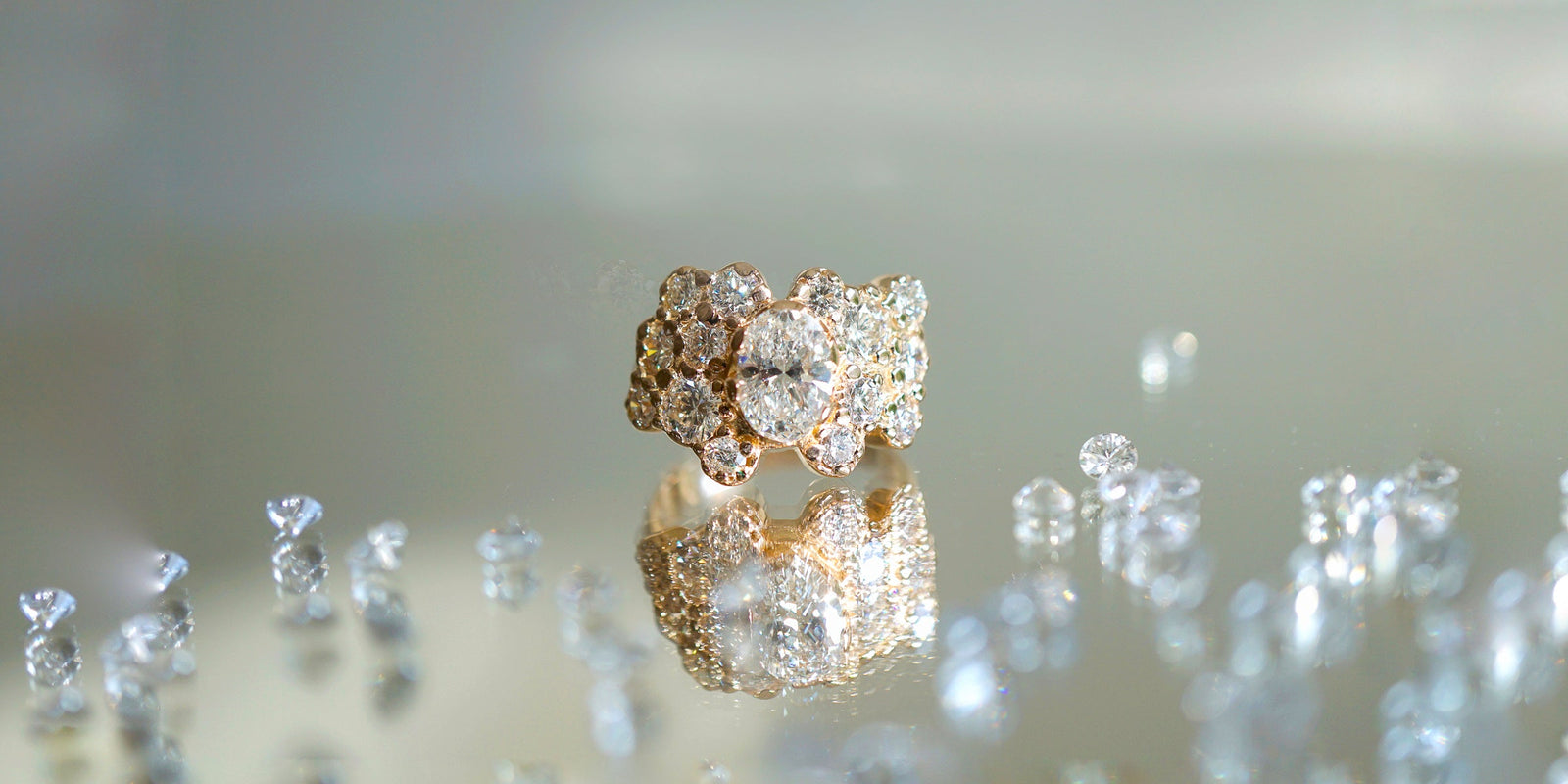
There are good answers to this. A band can be curved to follow the shape of the engagement ring, notched so the setting tucks into it, or kept deliberately a few millimeters away so the two read as a pair rather than one piece. None of these is the right choice in general. It depends on the rings and on the hand wearing them.
Comfort is a matter of millimeters
Two rings stacked together are wider and heavier than either one alone, and the fit changes. A band that feels fine alone can feel tight once it sits against another ring, especially in warm weather or after a long day. Width matters too. A 2 mm band next to a 4 mm engagement ring will look and feel different from a matching pair. This is why I like to make the band while the engagement ring is on the table, or at least on the hand, rather than guessing from a photograph.

Metal changes how the pair ages
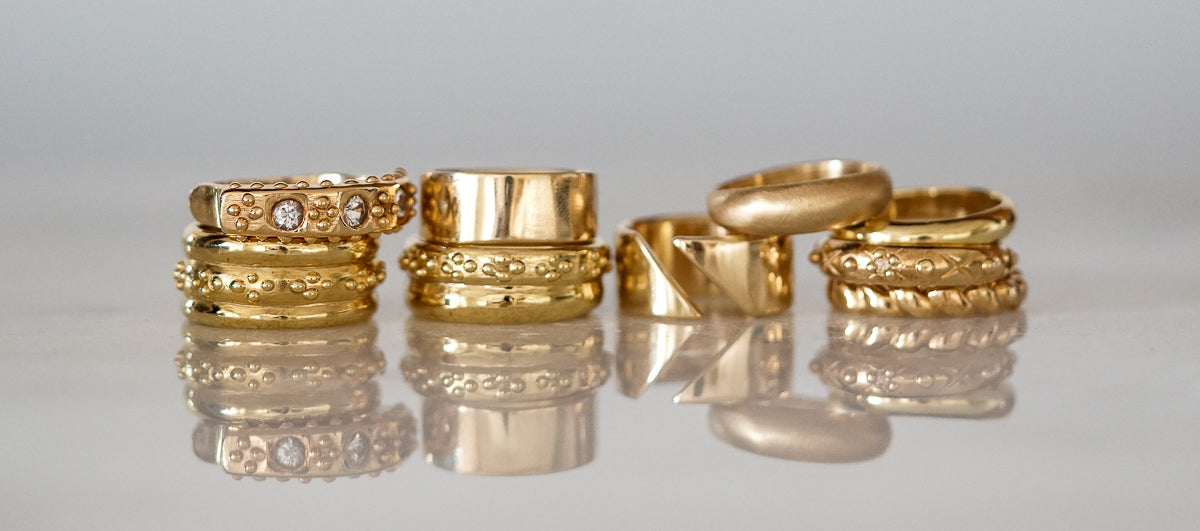
Pairing metals is where practical and aesthetic questions overlap. Two rings in the same karat of gold will age at the same pace. A 14K band against an 18K engagement ring will not, because 18K is softer and richer in color, and the difference can show after a few years of wear. Silver is a lovely option for a band when the budget or the style suggests it, but it is considerably softer than gold, tarnishes, and shows daily wear more quickly. A silver band stacked against a gold ring will pick up scratches the gold doesn't. For a ring worn every day for decades, I will usually talk someone toward gold. For a lighter-wear piece or a stacking ring that gets swapped in and out, silver can be a good choice, as long as we've talked honestly about the patina.
Why I make the wax before anything is final
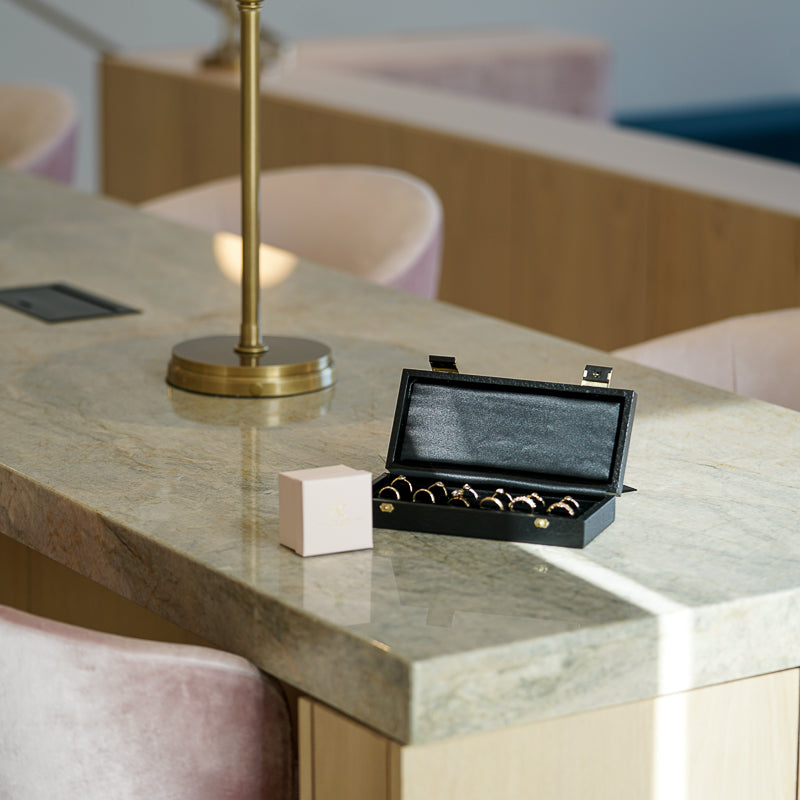
This is the part of the process I would never skip. A band design usually takes several meetings, each one often an hour and a half to three hours, because we are working out proportion, curve, and wearability together. I bring examples of profiles and widths so clients can see them in person or over video. Then I carve the band in wax and have the client try it on next to the engagement ring. When a client is far away, I ship wax models back and forth until the fit is right. A wax model is cheap compared with a cast band, and it shows things a drawing can't: how it sits against the other ring, whether it spins, and whether the pair feels like yours.
Often the right band is not the one the client came in imagining. A client who wanted something plain ends up wanting a gentle curve, or a client who wanted a matched set decides on something contrasting. That's the kind of decision I'd rather see made in wax than in gold.
I'd love to see what you have and talk through what might be possible. You can reach out to set up a consultation, or browse a bit of my work at anacavalheiro.com.



Leave a comment (all fields required)